Cleaning water plant tanks


Cycled, first day of Minnesota State Fair for 2023

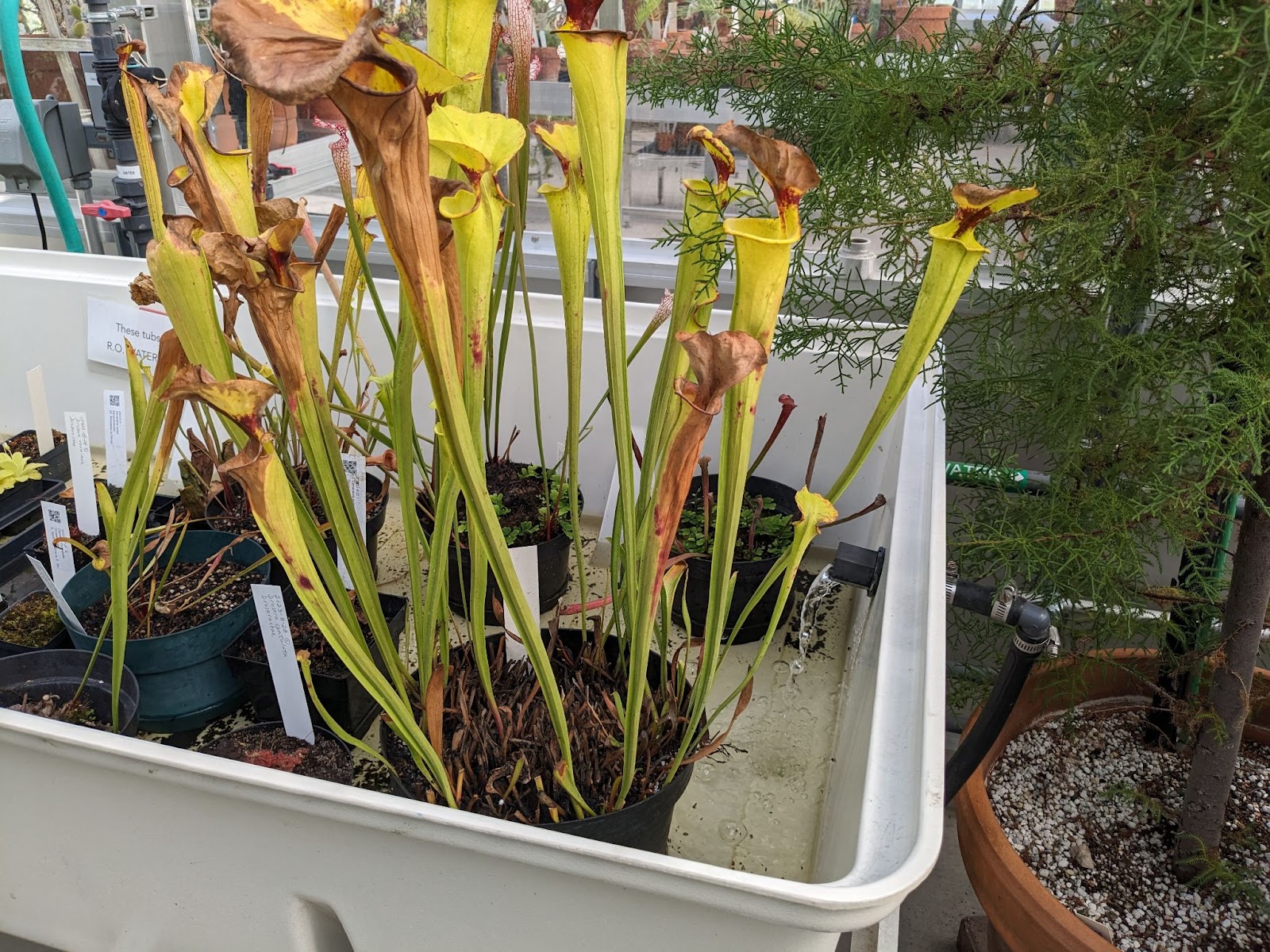
Cleaning tank pump filters, particularly the tank with the carnivorous pitcher plants
I also cleaned the soot from carnivorous pitcher plants (see photo)

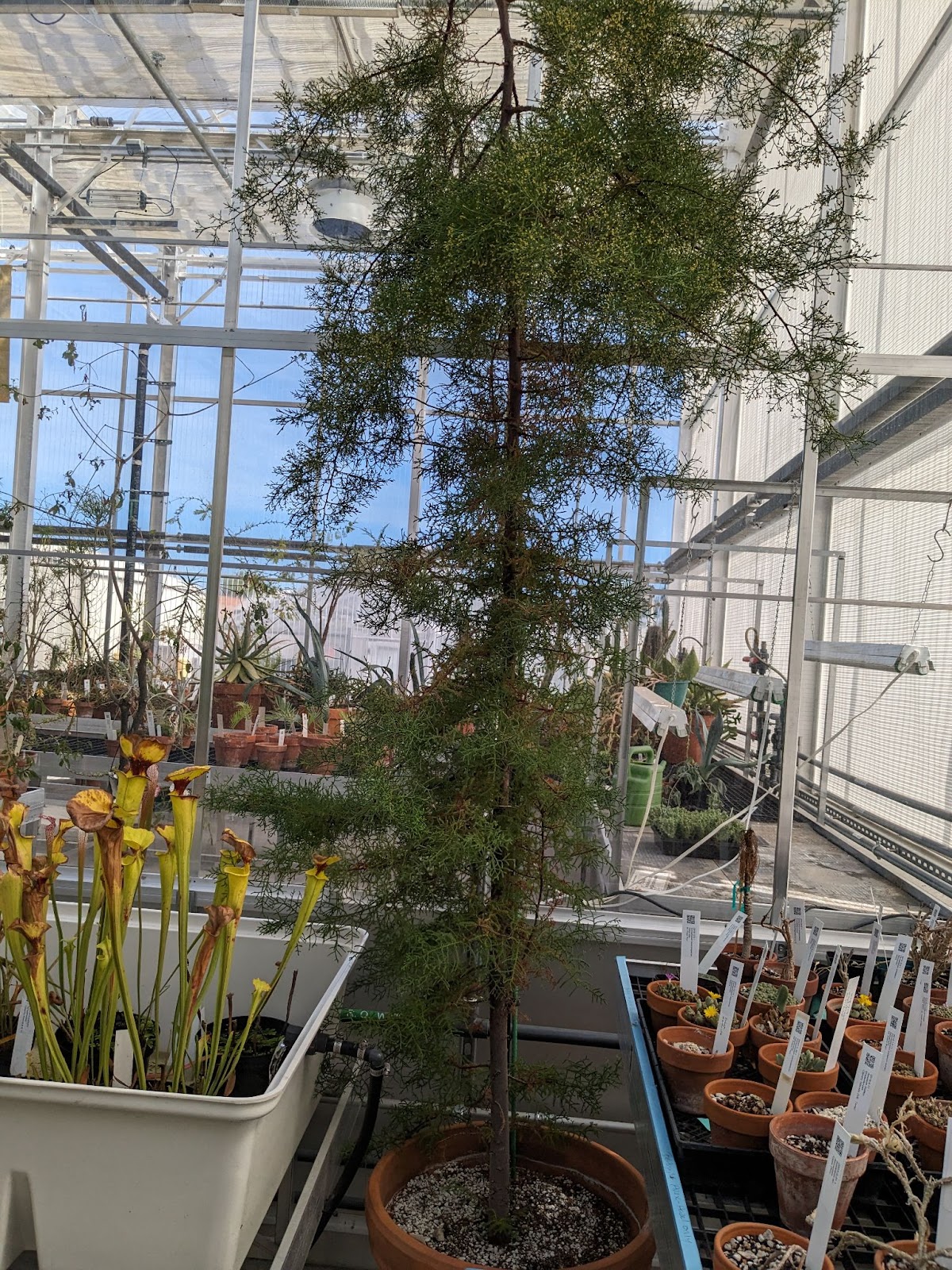
Next to the tank, the Asian tree Glyptostrobus pensilis (in the cypress family), had to be swapped out with one of the cycad trees. This effort took 3 of us to perform. The cycad was doing poorly next to the tank resulting in large yellow spots on the fronds. The G. pensilis will probably do better in the position next to the tank.  A year ago I had moved the G. pensilis to its former location, and adjusted the stakes to help keep it upright. It has grown well in the meantime.

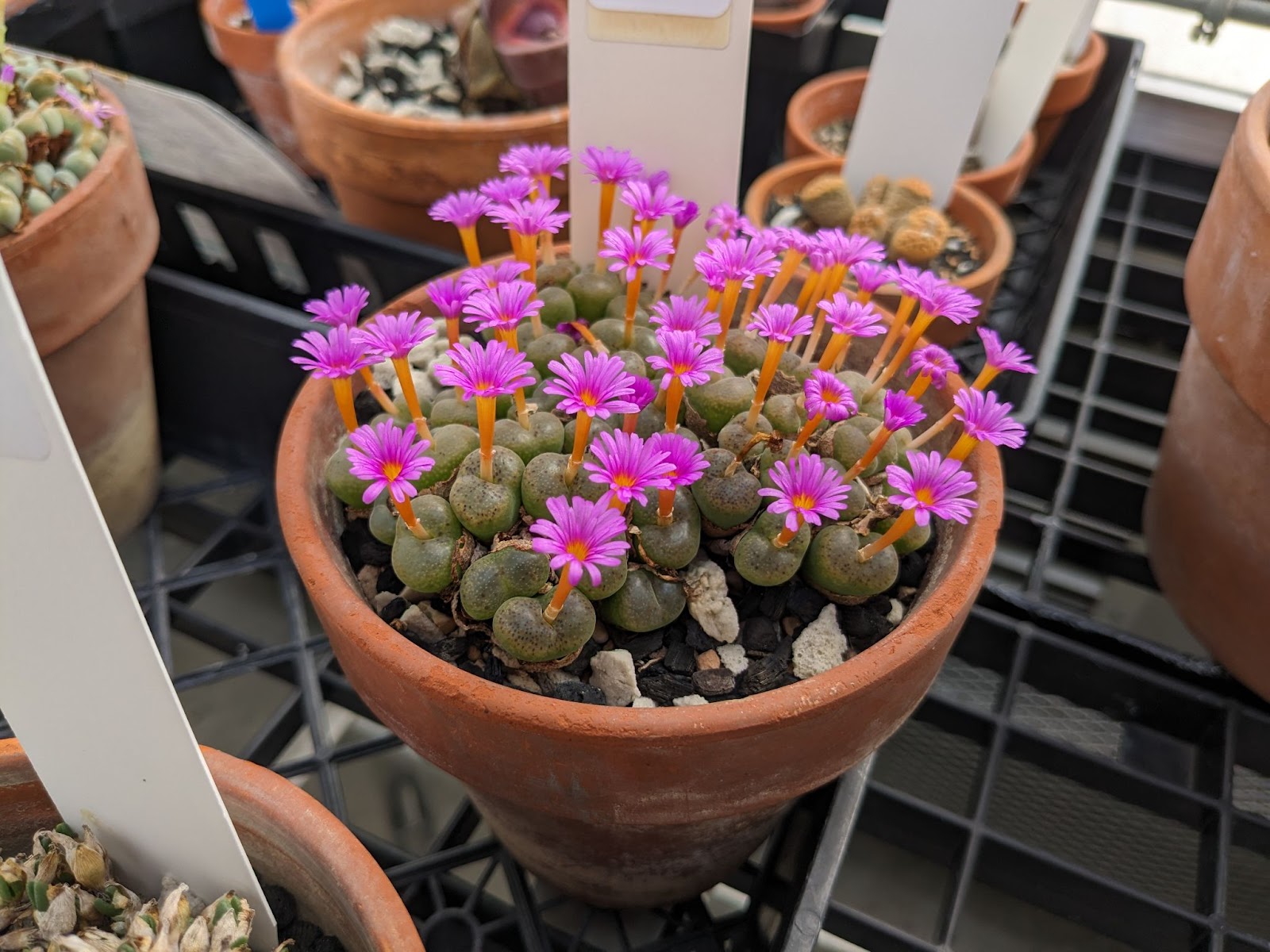
Next to the G. pensilis tree I noticed the pot of stone plants in flower. The plant is from Africa: Conophytum

lithopsoides.


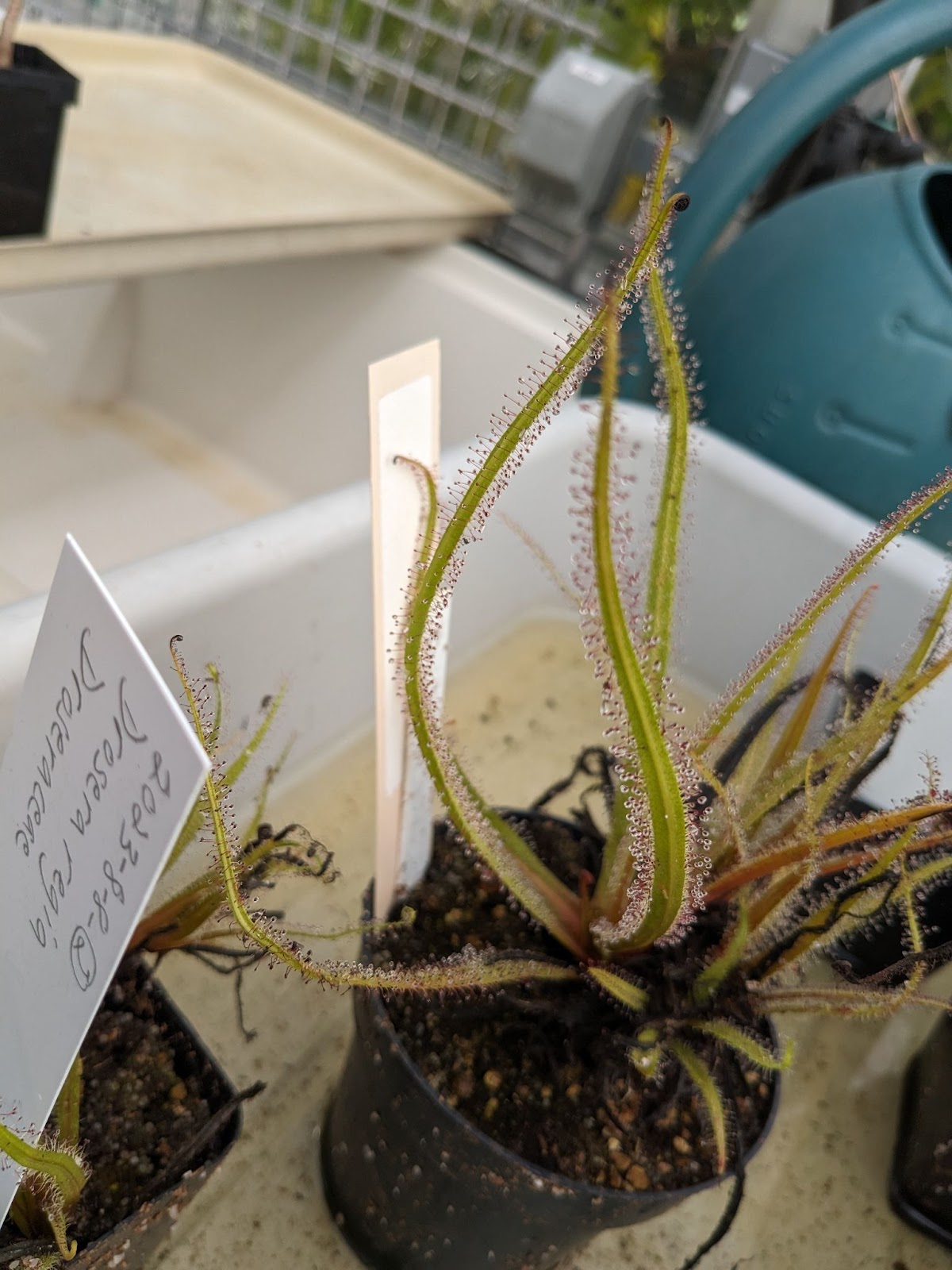
Another cool aquatic carnivorous plant: Drosera regia (a rare form of sundew plant, from a single valley in  Africa)

Comments

Popular posts from this blog

Thrip control: peppermint and clove

Here's a question: how many natural plant scents do you find repellent? The one that comes to the top of my mind is the scent of the newly blossomed corpse flower, Amorphophallus titanum . It smells very much like the name implies. If I could produce a scratch-and-sniff blog post, I would be tempted. The odor is horrible to humans, but sweet to some flying insects which are also attracted to rotting flesh. But perhaps you cannot tolerate the scent of clove, or eucalyptus? Insect pests are like us in this respect. Pests in the garden and greenhouse Insects, arachnids, fungi, and viruses. Their numbers are legion. The battle is constant. The most effective weapon is vigilance. In addition to vigilance, there are biological controls made from natural compounds which are generally non-toxic to humans. Included in this category are essential oils. For example cinnamon, rosemary, sage, neem, clove, peppermint and many others. These oils are repellent, and even toxic, to many of the pests...

Nerding out in Japan, autumn of 2025

We celebrated a bit of good news in our household with a spontaneously planned trip to Japan in November. Completely unintended, the trip coincided with the full regalia of fall colors. Particularly notable were the popular Japanese maples of every size and variety with their brilliant reds, yellow, oranges, greens, and rusts. But happy accident, we learned a few things about the art of sculpting full-grown trees - niwaki - and how to protect plants from ice and snow over the winter - yukizuri . Winter is coming The fall colors were still in full swing with crowds of adoring leaf-peepers - like me - filling the famous gardens and parks. Despite the crowds, there was already serious preparations for the coming winter. Fancifully pruned trees - the tree-sculpting art of niwaki similar to bonsai -  were being trussed with ropes and propped up on long poles . As newcomers, the preparations seemed extremely odd, as if some hurricane was about to shred the life out of every branch an...

New roots for an old soul: extreme 30-foot plant cutting

A large contingent of students and staff was gathered when I arrived for my volunteer shift at the Conservatory Greenhouse at the University of Minnesota on the St. Paul campus. The crowd was on hand to help with the gentle felling of the largest plant in the greenhouse, decades old and 30+ feet tall. Native to the island of New Caledonia in the South Pacific, this fern -- S phaeropteris intermedia the largest of all tree ferns -- has been happily growing in the tropical room of the greenhouse for a number of years, to the point its fronds are brushing up against the glass ceiling panes of the roof.  Tree fern fronds brushing against the roof of the U of M greenhouse Rather than cut the tree down and lose the specimen, the staff decided to try to save the tree. The process would involve cutting off the top half of the tree and reinserting it into a new space in the soil of the greenhouse floor. Months of planning and preparation A well-known technique was used, referred to as ai...