Trimming the trumpet plant

 Although the morning temperature outside was 44F, I was happy to cycle, given the relatively dry conditions. Rain was forecast for later today, but as I write no rain has fallen.

My ID card malfunctioned when I went to use it on the door lock to room 1C. Curator J was there to observe the attempt. He said he’d look into the sponsorship program to see if I’m still enrolled.

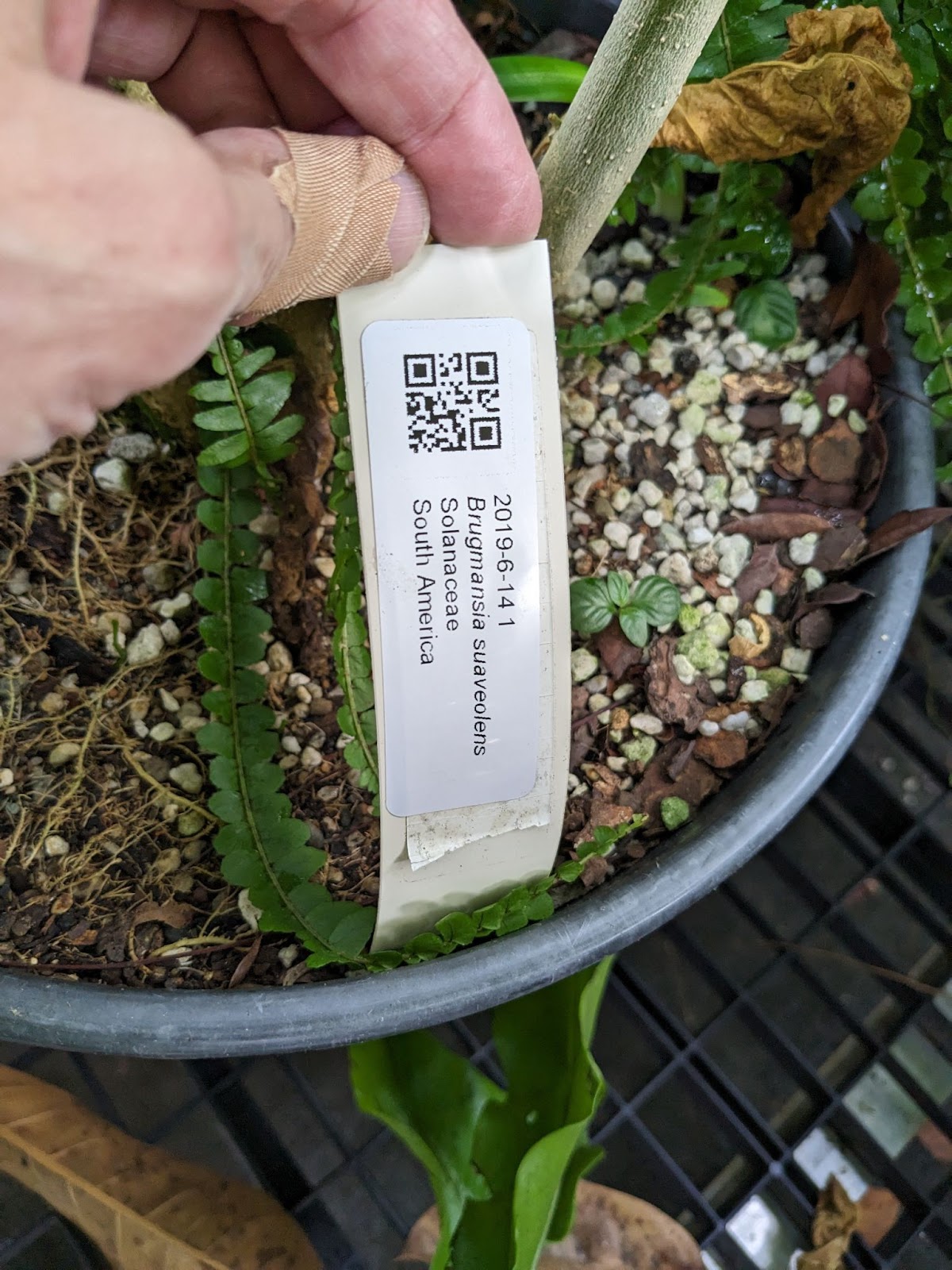
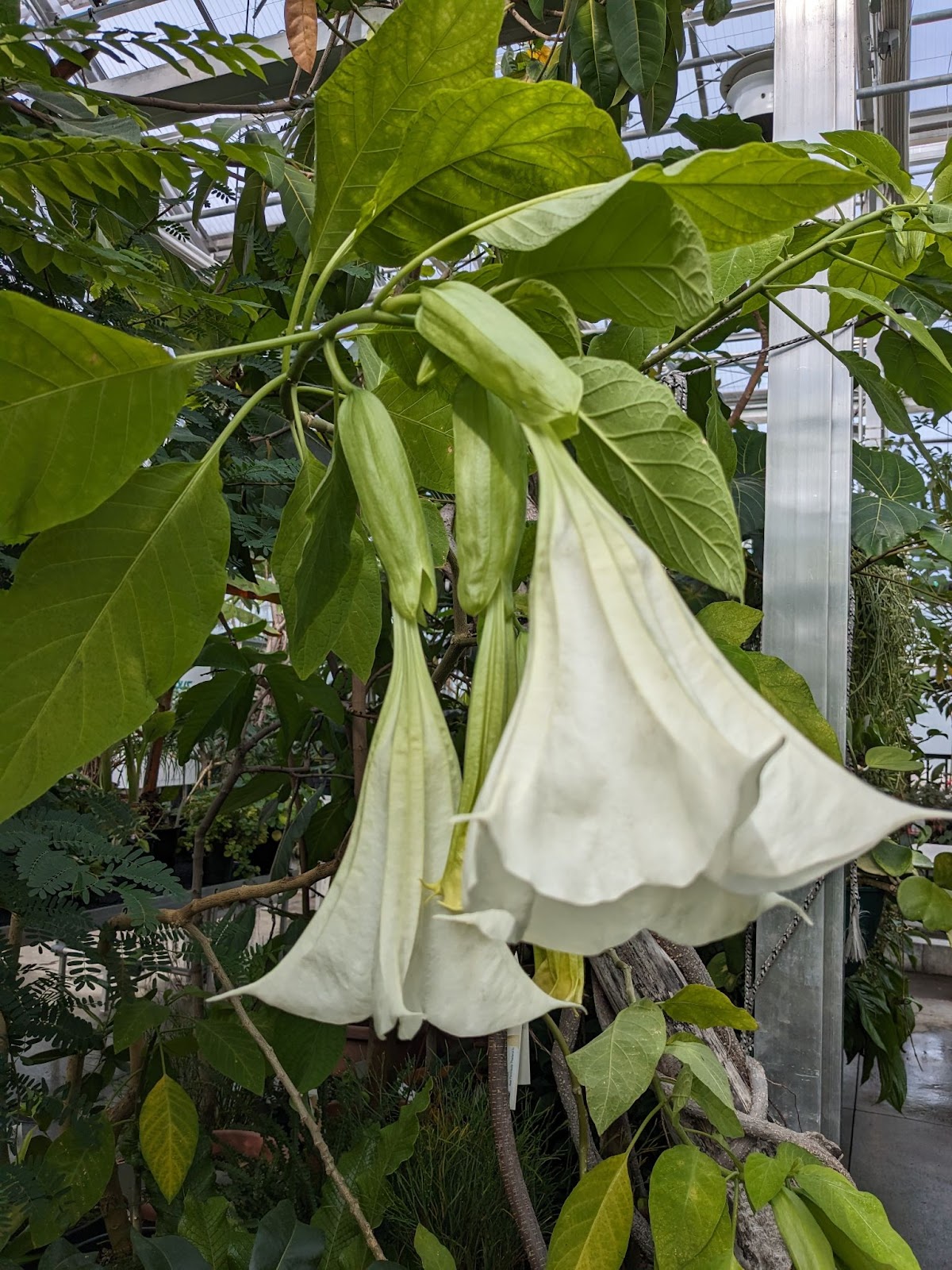
Coordinator A’s task list: trimming back a climbing vine on a white conduit pipe in 3C, and cleaning plants in 2C. In particular the white trumpet plant (Brugmansia suaveolens), this plant has a number of pests on its large leaves including white fly eggs, scale, and mealybugs. The plant is to let the plant finish its flowering, then cut down the main trunk and allow the smaller trunk to grow up. This will contribute to the reduction in the biomass in room 2C. 

Brugmansia suaveolens (Brazil’s white angel trumpet)
Comments

Popular posts from this blog

I celebrate learning this about cycad plants

I didn't know that the cardboard palm - Zamia furfuracea - is a cycad. It isn't a palm tree (don't judge me, I'm not a botanist). But it also doesn't look like the other more familiar types of cycads with their fluted upright palm-like fronds. I didn't know it is said to be the second most commonly cultivated cycad, after Cycas revoluta . I didn't know this plant is unrelated to the common ZZ plant - Zamioculcas zamifolia - although they have a similar appearance. Before today I didn't know any of these things, but now I am happy to have learned them. From the parking lot I walked to the U of M Conservatory greenhouse in near-zero F weather. Stepping into the tropical spaces was a joy of its own. But being able to learn new information and experience new procedures was a compounding factor. Joy squared. During my 3-hour volunteer shift, my initial task was to clean the parasite critters (mealybugs and scale) from the stems and leaves of the cycad, Zami...

The eponymous palm of Palm Springs

Tens of thousands of native California fan palms ( Washingtonia filifera)  rise over the gardens and streets of Palm Springs. The fan-like leaves flutter and wave as the trees gently sway in the desert breeze. If a plant could be described as elegant, this plant would certainly be one. Delicate fibers peel away from the leaf blade as they age, giving the palm part of its name, filifera . The advantage of the fibers to the plant is uncertain; however, the fibers were used by the indigenous Cuhuilla tribes for tools and fabrics. It is no accident the city is named for the palm. For centuries the native Cuhuilla residents were vastly outnumbered by fan palms. For the Cuhuilla, the plant became an important resource for their tools and shelters. Even today, I wouldn't be surprised if the number of palms outnumber the residents of the current modern city. Bird's eye view over old Palm Springs neighborhood; fan palms are everywhere. In their native environment, the palms grow best al...

Sharp elbows in the desert

How do plants do it... ...some stand-off-ish plants have figured out how to keep their distance from each other. They have evolved clever adaptations - sharp elbows - to keep their neighbors away. This behavior is important for survival, especially in the desert where plants compete for water.   I have noticed this phenomenon especially when I've been on a plane flying low over the desert. Where there are plants, they are uniformly distributed but not touching each other. They don't form clumps. They seem to know how far apart to grow. How is that? Why is it these desert plants don't form clumps? They weren't planted this way on purpose (Palm Springs, CA). It seems so obvious to me now that I recognize what is going on, but it took me a few years of hiking in the desert to be mentally conscious of how widely separated, but yet uniformly distributed in the landscape many plants seem to be. How is it that plants are able to keep what appears to be a relatively uniform dis...