Vine maintenance

Today it seems B... and Curator J... had not planned anything for me to do. So we all scratched our heads, so to speak, for a few minutes while Al and B considered the possibilities. Finally, we decided there are several plants, particularly on the vine bench, in need of cleaning. The scale insects and subsequent black sooty mold collect on the leaves and decrease the plant’s vigor. And, the black curled leaves are unsightly.

I collected three of the vines and brought them outside to the little courtyard next to the workroom. Outside I was able to freely move around the plants scrubbing off the mold and the scale insects. The most affected vine was the Thunbergia mysorensis. The other two vines were Euphorbia heterophylla (Mexican fire plant) and Tetrastigma voinierianum (chestnut vine).

After cleaning, pruning, and repositioning the vines, B mentioned the Zamia plants across from the vines were also heavily infested with scale insects and sooty mold. I spent the last half hour cleaning two of the small plants. But, there are more on the bench in need of cleaning. I will add them to my list for next week.

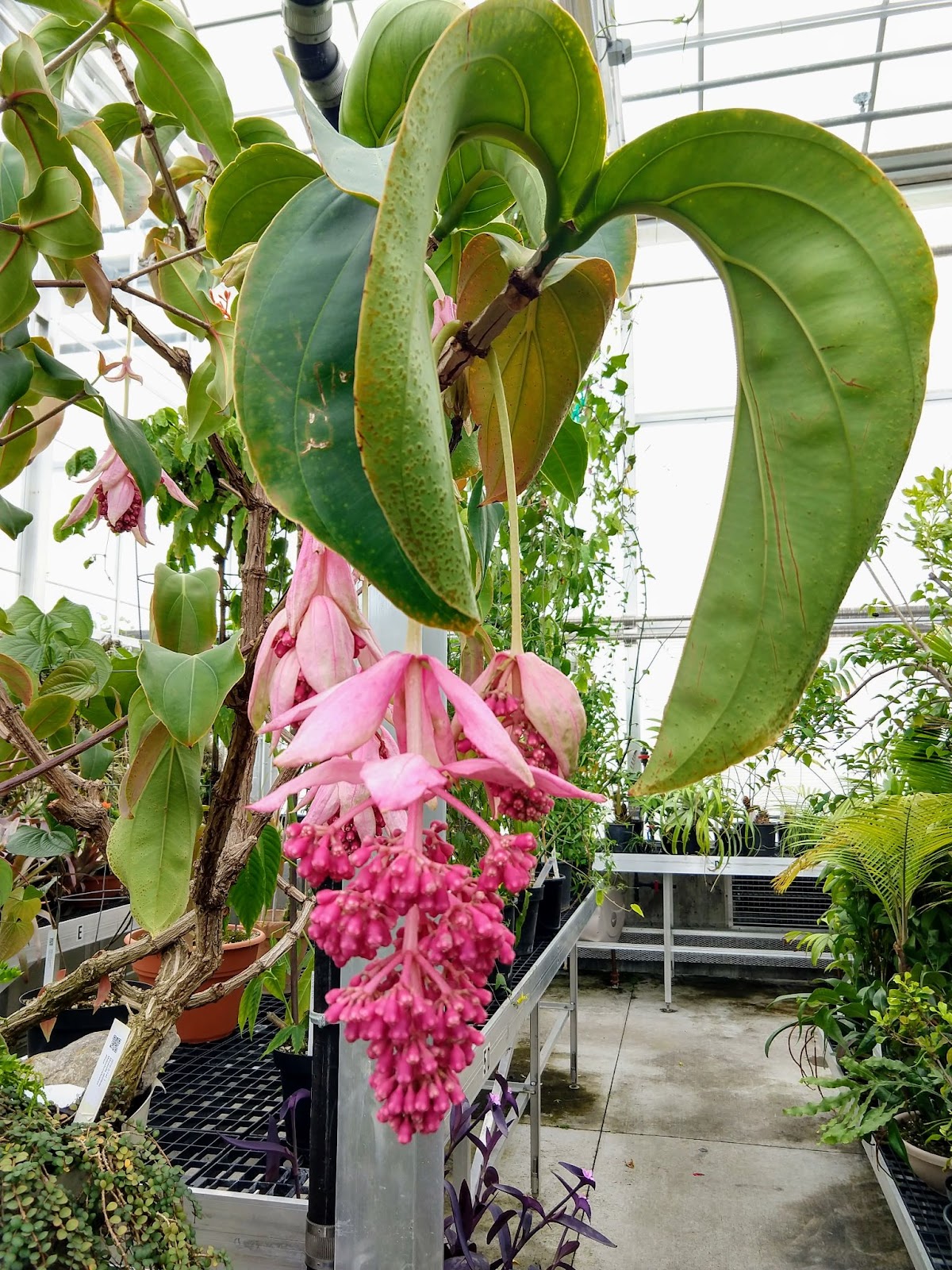
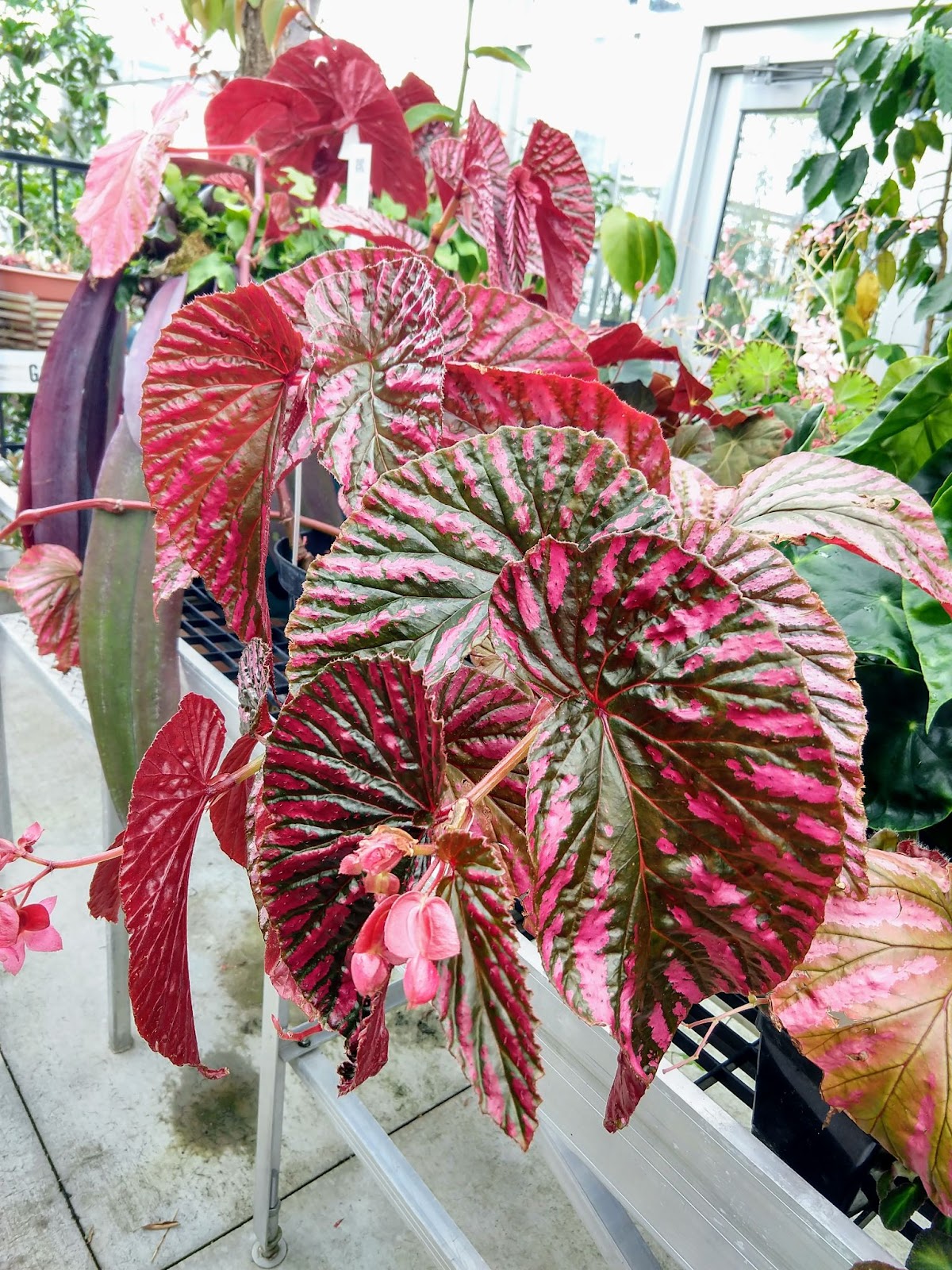
Meanwhile, spring continues in the greenhouse. These plants are all located close to the vine bench. Two of them are close to my heart:
On the left is Medinilla magnifica from Asia; on the right is Begonia brevirimosa from Malaysia.


Sidenote: B told me that the new student-worker V... had caught a cockroach in the hall. He brought it into the greenhouse and fed it to one of the pitcher plants! 

Comments

Popular posts from this blog

Another routine spectacular day in the greenhouse

It has been a sincere pleasure for me to volunteer a few hours a week at the University of Minnesota Botanical Conservatory. After many visits over the last few years, exactly none of those days have felt ordinary or repetitive. If there is a routine , it is that the botanic diversity of the collection - with over 3000 species - is displayed in a spectacular way each day. The Conservatory is located on the St. Paul campus, and is free of charge and open to the public during typical weekday hours. For instance, today most of my allotted time was spent in just one of eight rooms, the room that houses the tropical collection. The chores included pruning, re-potting, spraying, sweeping, etc. As I moved through the room, in every direction, there seemed to be a stunning plant pleading to be admired.  After the chores were complete, I had the opportunity to go back and photograph some of the beauties that surrounded me while working.  Dendrobium tangerinum , Papua New Guinea Dendr...

I celebrate learning this about cycad plants

I didn't know that the cardboard palm - Zamia furfuracea - is a cycad. It isn't a palm tree (don't judge me, I'm not a botanist). But it also doesn't look like the other more familiar types of cycads with their fluted upright palm-like fronds. I didn't know it is said to be the second most commonly cultivated cycad, after Cycas revoluta . I didn't know this plant is unrelated to the common ZZ plant - Zamioculcas zamifolia - although they have a similar appearance. Before today I didn't know any of these things, but now I am happy to have learned them. From the parking lot I walked to the U of M Conservatory greenhouse in near-zero F weather. Stepping into the tropical spaces was a joy of its own. But being able to learn new information and experience new procedures was a compounding factor. Joy squared. During my 3-hour volunteer shift, my initial task was to clean the parasite critters (mealybugs and scale) from the stems and leaves of the cycad, Zami...

Remembering my former city garden

This post is more of a journal entry than a public blog post. It is interesting to me, but won't be too interesting to almost any other reader - except perhaps my partner who was there as a co-conspirator. I want to document my thoughts about the past, my backyard garden, and what we put in it. The size of our city lot was not large. At 100 x 50 ft, there was just enough room for the house, a small garage, and back yard. The driveway was shared with our neighbor. The style of the house was standard American Foursquare, built in 1903. We bought the place in the early 1990's and slowly, over the next 25 years, renovated almost every inch the house and garden. A dry stone wall was built, with terrace bed to break up the height of the wall Caladiums and dragon-wing begonias line the steps of the front porch Well-earned sit-down on the front porch after a busy day Front wall terrace with blue phlox, hostas, astilbe, snap dragons, and coral bells. Front wall terrace, brunnera "J...